Building a FullStack Application using Spring Boot, ReactJS and PostgreSQL: A Step-by-Step Guide
Getting Started
Step 1: Register Your Application
- Go to Enterprise Service Portal within ServiceNow
- Click Service Catalog
- Search for "Application Registration"
- Fill in the details and click Submit
- You will receive an email confirmation with a three-letter app code
Step 2: Onboard Your Application
-
Navigate to NetApp ServiceNow DevOps
-
Click On-Board Application in CloudOne DevOps to begin the onboarding process
This processkicks off a series of automation steps, typically taking 40-45 minutes, after which you will receive an email with links to:
- Azure DevOps Project
- SelfAssist Portal
- Rancher environment
- NEAT, JFrog Artifactory, and StorageGrid
Developing Your Application
Step 3: Ordering Your App Stack
- Go to Manage CloudOne DevOps Application
- Search for your three-letter APP CODE
- Order the following Services -
- Pipelines: SpringBoot, ReactJS
- DataSpaces: PostgreSQL (choose an appropriate T-Shirt Size)
- Hostspaces: Order one Hostspace (choose an appropriate T-Shirt Size)
Step 4: Setting Up Your Development Environment
- Go to Azure DevOps Org and choose your project
- For the frontend:
- Navigate to
Repos/Files/ - Select reactjs-fullstackui from the drop-down
- Create a feature branch and clone the repo locally
- Navigate to
- For the backend:
- Navigate to
Repos/Files/ - Select springboot-fullstackapi from the drop-down
- Create a feature branch and clone the repo locally
- Navigate to
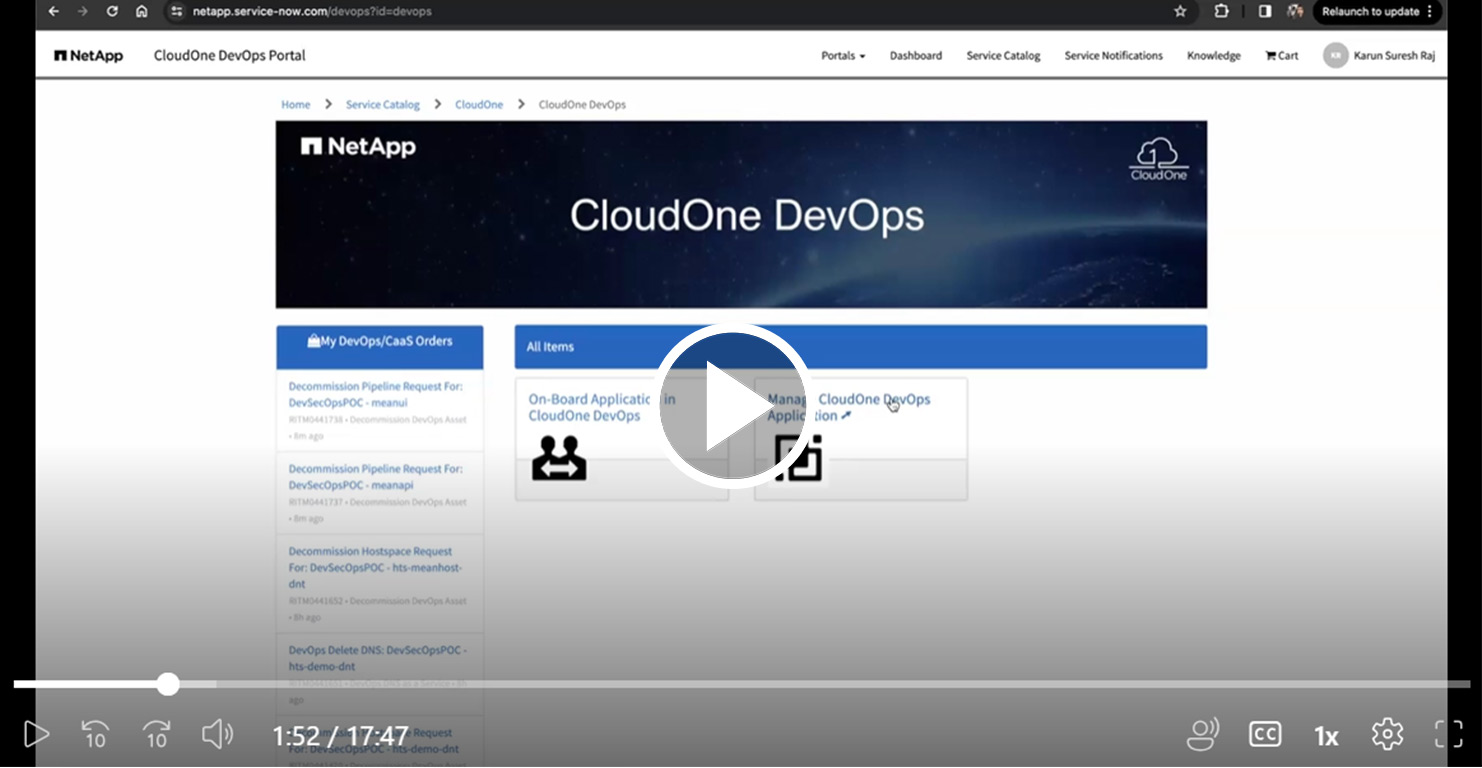
Watch this video walkthrough before proceeding to the document below.
Step 5: Local Development
Complete your Application development locally. Run following tests to avoid any failures within the pipeline:
-
ReactJS:
npm run test:cifor component level testingnpm run lintfor Lint testing
-
SpringBoot:
mvn testmvn clean install
Step 6: Preparing for Deployment
-
Commit and push front-end and back-end code to remote
-
Run the Pipeline and ensure the deployment to the workspace is successful without any errors
Finalizing Deployment
Step 7: Deploying to Hostspace
- Modify
azure-pipelines.ymlto comment out the workspace section and enable the hostspace section. This must be done for both API and UI repos
    extends:
    template: devops/reactjs-fullstackui.yml@spaces
    parameters:
        appVersion: 4.5.0
        acceptanceSpace: hts-srphost-dnt
        spaces:
        # workspace:
        #   helm:
        #     overrideFiles:  hts-fullstackui/values.workspace.yaml
        hts-srphost-dnt:
            helm:
            overrideFiles: |
                hts-fullstackui/values.hostspace.yaml
- Within API repo, update
values.yamlLiveness and readiness probes, to ensure proper delay is allocated for your application to come up
    livenessProbe:
    httpGet:
        path: /
        port: springboot
    initialDelaySeconds: 90
    periodSeconds: 10
    successThreshold: 1
    timeoutSeconds: 1

    readinessProbe:
    httpGet:
        path: /
        port: springboot
    initialDelaySeconds: 90
    periodSeconds: 10
    successThreshold: 1
    timeoutSeconds: 1
Step 8: Setting Up PostgreSQL
- Create your connection string using the PostgreSQL credentials available in the Rancher UI
- Securely manage this connection string as a
variablewithin Azure DevOpsVariable Groups(Check Self Assist Documentation for more details) - Update
azure-pipelines.ymlandvalues.hostspace.yamlfiles to reference the envioronment variable
azure-pipelines.yml
    spaces:
      hts-srphost-dnt:
        variableGroups:
          - postgres_vars
        secretVarKeys:
          - dburl
          - uname
          - pass
        helm:
          overrideFiles: |
            hts-fullstackapi/values.hostspace.yaml
values.hostspace.yaml
env_vars:
- name: "primary"
  configs:
      INSTANCE: "primary"
      DB_HOST: "primary.db.host"
      AWS_ENDPOINT: "https://dummy.com"
      DB_URL: "$dburl"
      UNAME: "$uname"
      PASS: "$pass"
- Update application configuration file to reference above envirornment variables
application.yaml
    spring:
        jmx:
        enabled: true
        datasource:
        driver-class-name: org.postgresql.Driver
        url: ${DB_URL}
        username: ${UNAME}
        password: ${PASS}
Step 9: Custom Domain Setup
- Register a custom domain
- Navigate to NetApp ServiceNow DevOps
- Click Manage CloudOne DevOps Application
- Search for your three-letter APP CODE
- Click DNS as a Service and enter your preferred domain name to get the DNS Record created
- Update
values.hostspace.yaml(within the UI Repository,reactjs-fullstackui) with your custom domain
   ingressEndpoints:
   - host: fullstackdemoapp.netapp.com
- To enable CORS, update back-end code(
springboot-fullstackapi) to reference custom domain name
    @Configuration
    public class WebConfig {

        @Bean
        public WebMvcConfigurer corsConfig() {
            return new WebMvcConfigurer() {
                @Override
                public void addCorsMappings(CorsRegistry registry) {
                    registry.addMapping("/**").allowedMethods("GET", "POST", "PUT", "PATCH", "DELETE").allowedOrigins("https://fullstackdemoapp.netapp.com");
                }
            };
        }
    }
Commit your changes and push to remote. Your application will be accessible via the custom domain
Need Assistance?
If you encounter any issues or require support, don't hesitate to reach out to one of the SCALE team members. We're here to help!